Procurement has always been relationship-driven.
Vendors are onboarded through trusted contacts. Payment details are confirmed over a quick call. Urgent invoice discrepancies are resolved with a follow-up conversation to "clear things up." These workflows are designed for efficiency and partnership.
That same relationship model now creates a "Deepfake Gap."
Modern vendor fraud no longer requires…

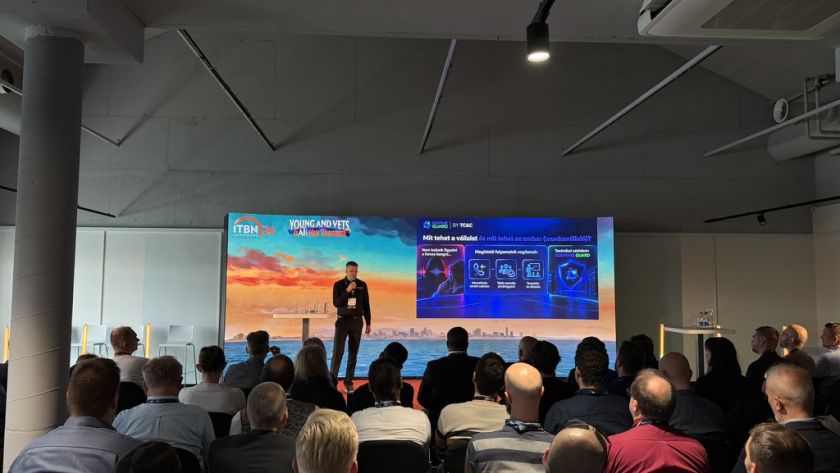
TC&C was proud to participate as an exhibitor and supporter of ITBN CONF-EXPO 2026, Hungary’s leading cybersecurity forum and professional meeting place, in Budapest at the Bálna Defense Center.
Deepfake Attacks: How They Deceive Us and How We Can Defend Against Them?
In the Human & Reality section, our colleague Zsolt Vassy, AI Expert at…
Peak season is built on speed. Orders spike, call volumes surge, and seasonal staff join the frontline. Customer expectations rise alongside shipping deadlines and promotional pressure. Support teams are trained to resolve issues quickly, minimize friction, and protect brand loyalty.
Attackers understand this rhythm perfectly.
When volumes are high and urgency is the "new normal,"…
The New Face of Invoice Fraud
Invoice fraud used to be a document problem. Finance teams focused on spotting altered PDFs, mismatched purchase orders, and suspicious email domains. Controls were built around documentation and the segregation of duties.
Now, the attack has shifted to the human layer.
Attackers no longer rely solely on fraudulent emails;…
High Frequency. High Trust. High Risk.
Payroll is the most trusted process in any organization. It runs on a predictable cadence and touches every employee. When it fails, it becomes personal.
This combination of high emotion and high frequency makes payroll a primary target for fraud. Historically, attackers relied on phishing emails to spoof bank…
"We Think" is Not a Control
When a suspected deepfake incident surfaces, the first question is rarely technical. It is evidentiary.
Was this a legitimate customer or a synthetic impersonation? Did your policy fail—or did it function as designed? Most importantly: Can you prove it?
Without consistent logging and structured evidence, deepfake incidents create expensive…
BUDAPEST, Hungary — Weaponized Generative AI is no longer a future scenario. It targets enterprise communication daily. Deepfake fraud material surged by 3,000%, striking enterprise channels every five minutes. While projected U.S. fraud losses will hit $40 billion by 2027, 60% of corporate executives admit their organizations have zero protocols to stop synthetic voice attacks.…
Deepfake detection vendors can deliver impressive demos.
A short clip is analyzed. An anomaly score appears. A dashboard lights up. The technology looks compelling.
But production environments are not demo environments.
In production, calls are messy. Video feeds are imperfect. Workflows are complex. Escalations require governance. And when something goes wrong, evidence must stand up…
Architecture is Strategy
Many security controls fail not because they are weak, but because they are misplaced.
Organizations often invest in detection technology, then deploy it adjacent to the workflow instead of inside it. Alerts arrive after approvals are granted. Logs are stored separately from decisions. When fraud inevitably slips through, the assumption is that…
The Governance Gap
Deepfake defense projects are rarely delayed by technology or budget. They are delayed by Governance.
Security leaders recognize the urgent need for real-time detection, but Privacy and Legal teams raise valid questions: Are we storing biometric data? How long is audio retained? Does this violate employee monitoring policies?
When these questions aren't…
Security is the New Brand Equity
For decades, cybersecurity was a "behind-the-scenes" cost center—a silent lock on the door. But with generative AI fraud losses projected to hit $40 billion by 2027, security can no longer remain in the shadows.
To navigate the 3,000% surge in synthetic media, enterprises must move beyond passive protection. You…
Precision Under Pressure
In 2026, deepfake fraud is no longer a theoretical risk; it is an operational reality. When a synthetic clone of an executive appears in a video call to authorize a high-value transfer, you aren't just facing a technical glitch—you are facing a breach of the Human Layer.
The financial stakes are absolute.…