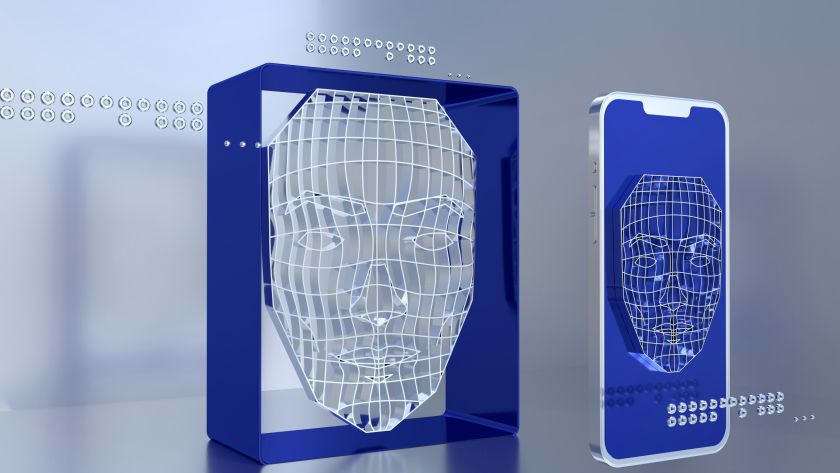
We are proud to announce that TC&C and the BME Department of Automation and Applied Informatics (AUT) have received the prestigious 2025 Zipernowsky Innovation Award for the development of the CARIN Deepfake Guard system. This recognition highlights one of the most significant innovation achievements at the Budapest University of Technology and Economics (BME), emphasizing excellence…
The False Dichotomy of Security vs. Experience
Every fraud leader faces the same pressure: the need to stop sophisticated attacks without alienating legitimate customers.
When deepfake detection enters live voice and video workflows, the primary fear is the "False Positive." This fear often leads teams to dial back thresholds until risk visibility vanishes—or worse, to…
Architecture is Strategy
Many security controls fail not because they are weak, but because they are misplaced.
Organizations often invest in detection technology, then deploy it adjacent to the workflow instead of inside it. Alerts arrive after approvals are granted. Logs are stored separately from decisions. When fraud inevitably slips through, the assumption is that…
Deepfake detection vendors can deliver impressive demos.
A short clip is analyzed. An anomaly score appears. A dashboard lights up. The technology looks compelling.
But production environments are not demo environments.
In production, calls are messy. Video feeds are imperfect. Workflows are complex. Escalations require governance. And when something goes wrong, evidence must stand up…
Demos are Not Defenses
Most security tools fail not because the technology is weak, but because the pilot is vague.
Loose criteria and unaligned owners lead to "impressions" instead of metrics. Deepfake detection is particularly vulnerable to this trap. If you cannot demonstrate a reduction in risk or an improvement in governance, your pilot will…
The Cost of Being Wrong
Budget season forces a brutal clarity. Every initiative competes for funding; every risk is weighed against finite resources.
Deepfake risk often struggles to gain traction because it feels "new." Unlike ransomware, it lacks decades of historical loss data. It is often dismissed as a "future threat"—until the first $10 million…
"We Think" is Not a Control
When a suspected deepfake incident surfaces, the first question is rarely technical. It is evidentiary.
Was this a legitimate customer or a synthetic impersonation? Did your policy fail—or did it function as designed? Most importantly: Can you prove it?
Without consistent logging and structured evidence, deepfake incidents create expensive…
The Price of Irreversibility
Treasury operates where speed meets irreversibility.
When a high-value wire is released, it is gone. Decisions are time-sensitive; markets close, and counterparties wait. Increasingly, the approvals that trigger these transfers are mediated through voice calls and virtual meetings.
This shift has weaponized the "Human Layer."
A convincing synthetic voice, armed with…
High Frequency. High Trust. High Risk.
Payroll is the most trusted process in any organization. It runs on a predictable cadence and touches every employee. When it fails, it becomes personal.
This combination of high emotion and high frequency makes payroll a primary target for fraud. Historically, attackers relied on phishing emails to spoof bank…
Finance’s Ultimate Pressure Test
Year-end close is a race against the clock.
Deadlines converge. Auditors demand documentation. Executives move rapidly between virtual boardrooms. In this environment, authority is assumed and urgency is normalized.
This is the ideal hunting ground for synthetic impersonation.
When approvals happen via video and voice, deepfakes replicate the exact signals finance…
The New Face of Invoice Fraud
Invoice fraud used to be a document problem. Finance teams focused on spotting altered PDFs, mismatched purchase orders, and suspicious email domains. Controls were built around documentation and the segregation of duties.
Now, the attack has shifted to the human layer.
Attackers no longer rely solely on fraudulent emails;…
The most dangerous fraud attempts rarely sound technical. They sound urgent. They sound distressed. They sound authoritative.
A caller claims their account is about to be frozen and they need immediate access. A "senior executive" demands a last-minute payment before a hard market close. A customer insists a shipment must be rerouted immediately to avoid…